
Home visits can be considered for some older adults, people recovering after a stroke, surgery or hospital stay, and those whose pain, weakness or balance problems limit daily activity. They are not a substitute for urgent medical care or specialist review when warning signs are present. Coverage at a specific KL address must be confirmed according to clinical suitability, travel time and physiotherapist availability.
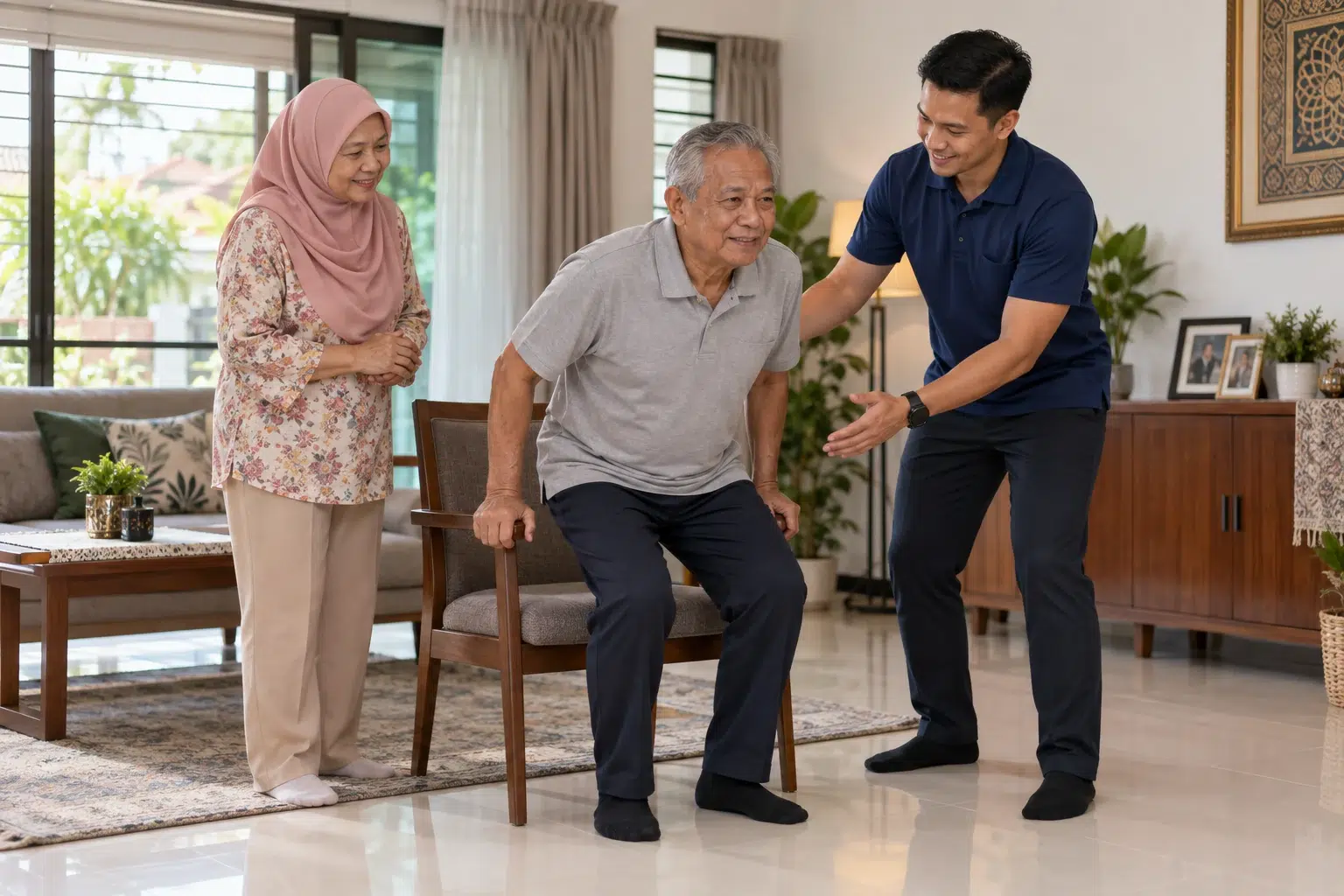
Who may benefit from a home assessment?
Older adults with reduced mobility
Assessment may help when walking, transfers, stairs or balance have become more difficult, especially after a fall or period of inactivity.
After stroke or hospital care
Home rehabilitation may support medically approved functional goals, with family involvement where appropriate.
Pain affecting daily tasks
Knee, back or joint symptoms should be assessed in context rather than assumed to represent one diagnosis.
Caregivers needing guidance
A visit can review room layout, assistance needs and equipment without prescribing one technique for everyone.
The World Health Organization describes rehabilitation as interventions that optimise functioning and reduce disability in interaction with a person’s environment. It also notes that rehabilitation is person-centred and may be delivered in community settings such as the home.[1]
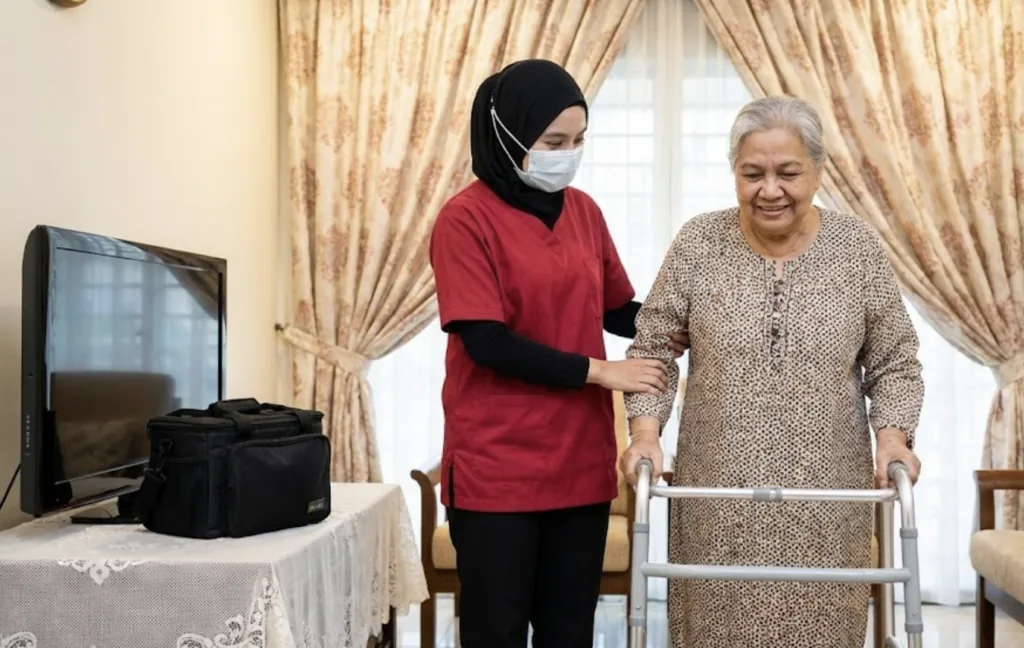
What happens during the first home visit?
The physiotherapist will usually ask about symptoms, medical history, recent treatment, falls, daily activities and the person’s goals. The assessment may review movement, strength, balance, walking, transfers and tolerance for activity. Relevant hospital reports, a current medication list and existing mobility aids can be useful, but medication should not be changed without advice from the prescribing clinician.
NHS patient guidance similarly describes a first physiotherapy appointment as including discussion of symptoms, medical history and lifestyle, followed by checks that may include strength and balance.[2] Findings then guide education, an individual activity plan, movement strategies, caregiver advice or referral. Frequency cannot be decided from age or diagnosis alone.

Scope and limitations of home physiotherapy
Where assessment shows that rehabilitation is suitable, physiotherapy may address bed mobility, sit-to-stand, balance, walking, activity tolerance and graded return to daily routines. For people recovering after stroke, the NHS notes that a home recovery plan may include physiotherapy and movement exercises alongside other rehabilitation needs.[3]
Physiotherapy does not replace medical diagnosis, imaging, medication management, surgery, speech therapy, occupational therapy or emergency care when these are required. No exercise, hands-on technique or fixed number of sessions produces a certain recovery outcome. Progress and recommendations should be reviewed if symptoms or function change.

Safe steps while waiting for assessment
- Keep walking routes clear and well lit; remove loose rugs, cables and obvious trip hazards.
- Use stable footwear and only mobility aids already recommended for the patient.
- Avoid pulling limbs or lifting someone alone when the required assistance level is unknown.
- Note changes in pain, weakness, falls, fatigue and activities that have become difficult.
- Stop an activity if sharp pain, dizziness, severe breathlessness, new weakness or instability develops.
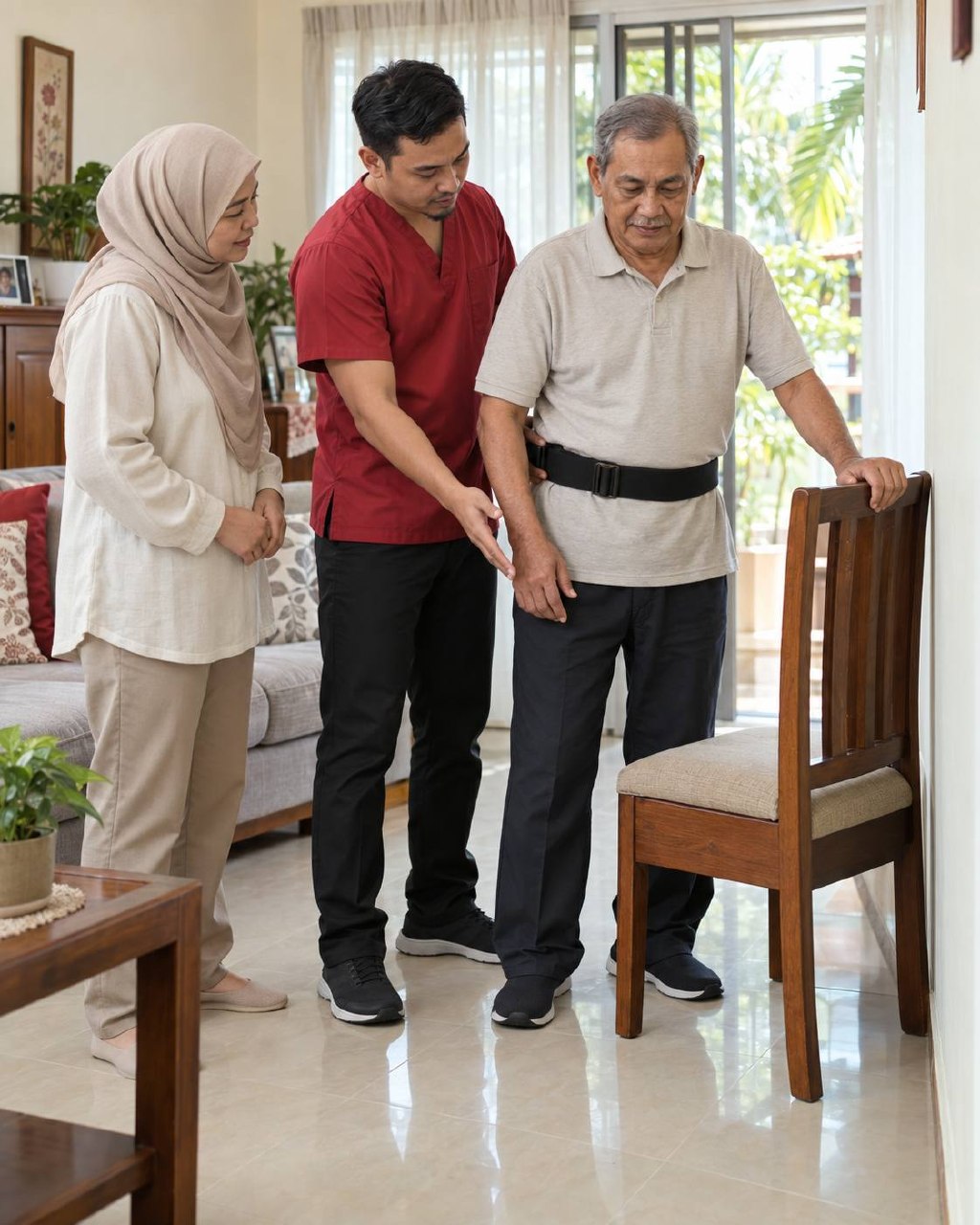
When to seek urgent medical help
Home physiotherapy coverage in Kuala Lumpur
Home visits can reduce travel and allow real household tasks to be assessed, but they are not automatically the best setting for every person. KL coverage may include areas such as Bangsar, Mont Kiara, Cheras, Setapak, Wangsa Maju, Titiwangsa, Kepong and Sri Petaling, subject to exact address, clinical needs and scheduling. Learn more about Physiomobile physiotherapy services and rehabilitation after stroke.
Frequently asked questions
Is home physiotherapy suitable for everyone?
No. Suitability depends on medical stability, goals, assistance needs, the home environment and whether centre or hospital facilities are more appropriate.
Should a caregiver be present?
A caregiver can be useful when the patient needs assistance or the family needs guidance. The need should be discussed during booking and assessment.
How many sessions will be needed?
There is no standard number. Recommendations follow assessment and should be reviewed according to function, symptoms, goals and response.
Are appointments available throughout KL?
The exact address, travel time, clinical suitability and physiotherapist schedule must be checked. A slot is not confirmed until the Care Team accepts the booking.
Check suitability and appointment options
If symptoms are increasingly affecting daily activities, an early assessment can reduce uncertainty and guide the patient and caregivers. Home and centre appointment slots depend on physiotherapist availability, location and preferred time, so booking earlier may help secure a suitable option.
Check physiotherapy optionsChat with UsDisclaimer: This is general education, not a diagnosis, exercise prescription or substitute for medical assessment. Seek urgent help for warning signs.
