
Physiotherapy for Stroke: Safe, Goal-Directed Rehabilitation
Physiotherapy after stroke is part of a wider specialist rehabilitation pathway. It begins only after urgent medical assessment and when the person is stable enough to participate. The programme should reflect the individual’s movement, function, fatigue, communication, cognition, goals and home situation.
What a physiotherapy assessment may include
The physiotherapist reviews medical precautions and explores bed mobility, sitting, transfers, standing, walking, balance, limb movement, strength, sensation, pain, fatigue and confidence. Falls risk, shoulder protection, equipment and caregiver needs may also be considered.
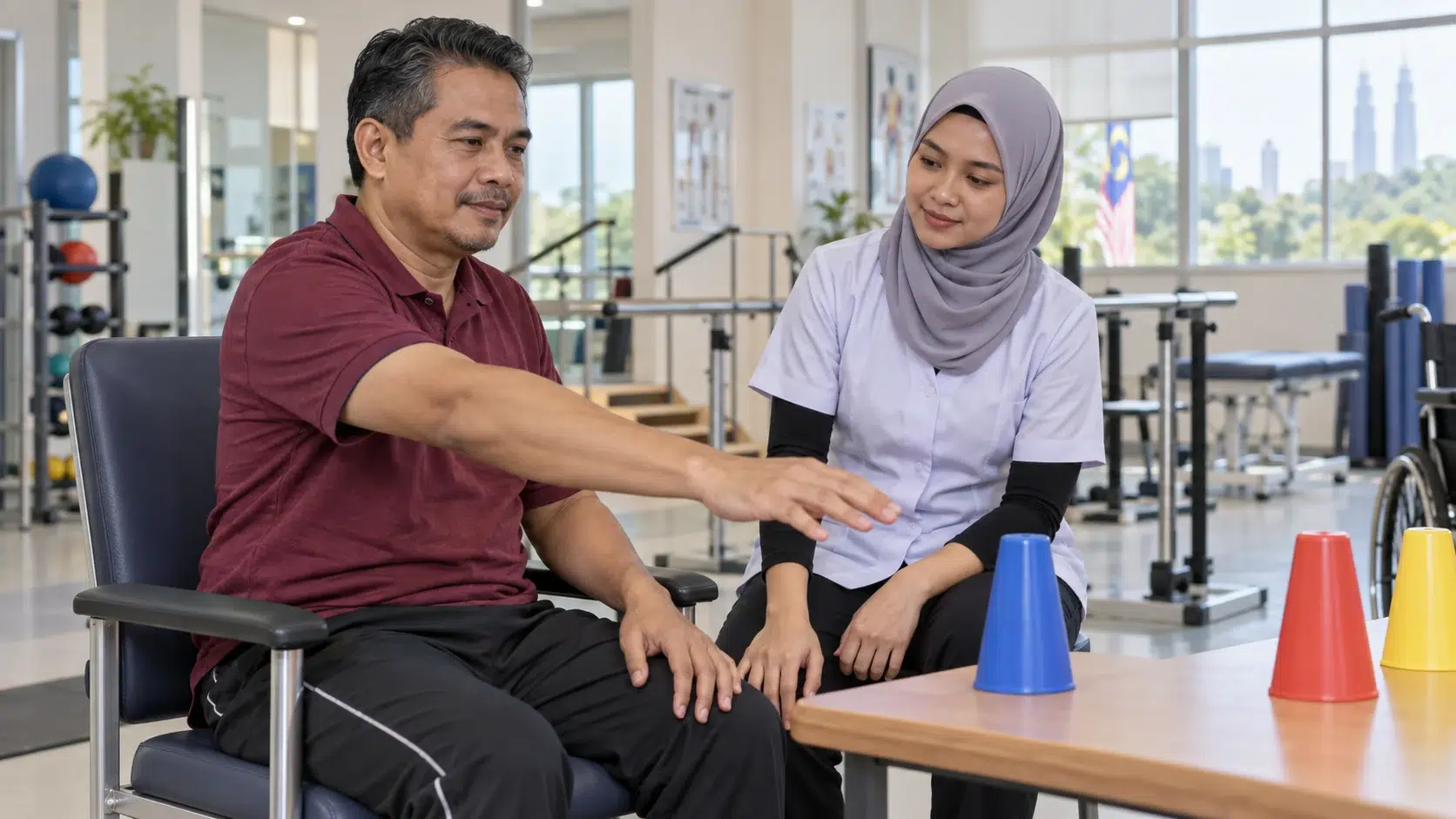
Goal-directed rehabilitation
Goals are most useful when they matter to the person, such as rolling in bed, transferring safely, walking to the bathroom, using an affected arm during daily tasks or returning to community activities. The team reviews goals as health, ability and circumstances change.
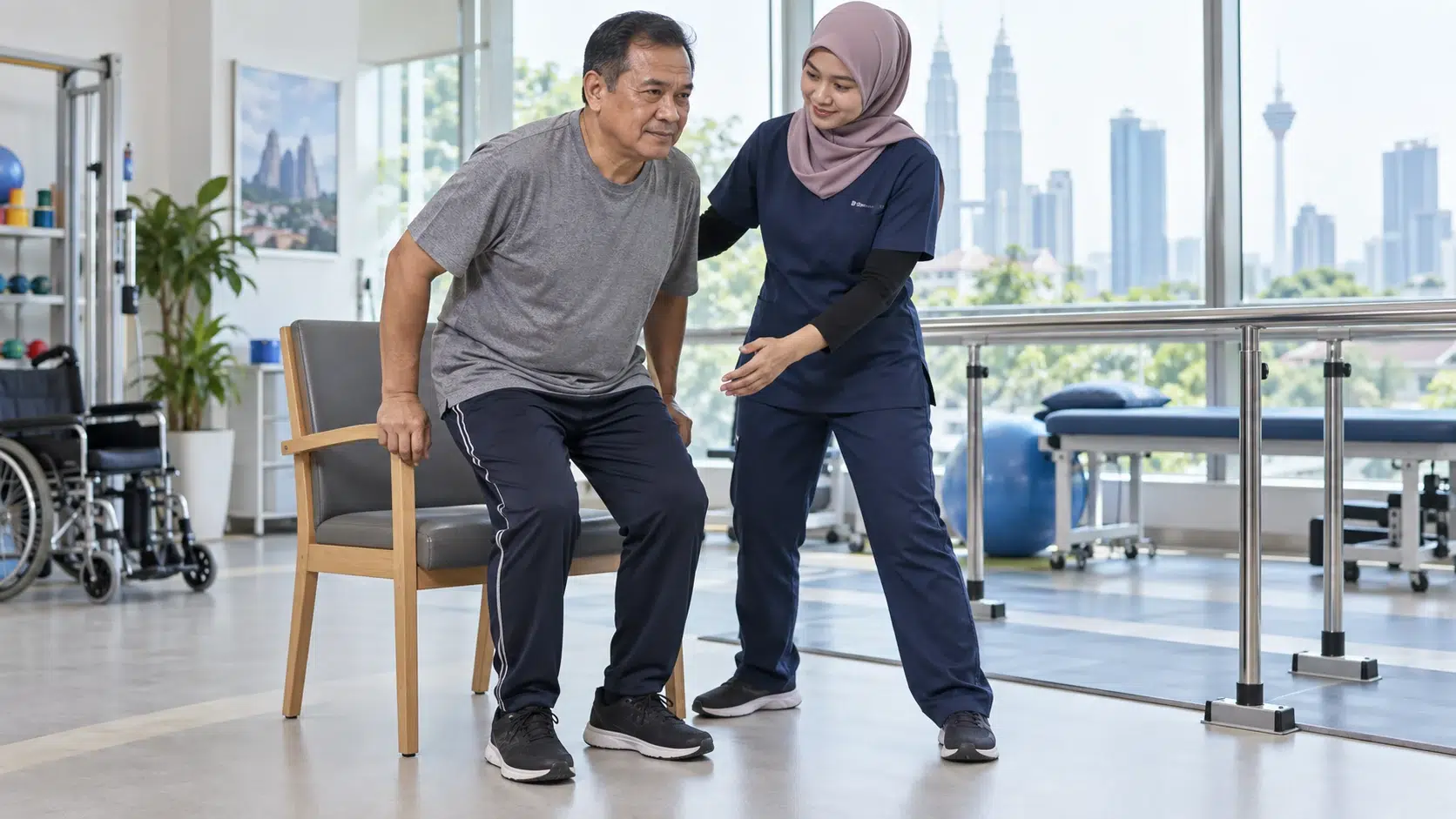
What physiotherapy may involve
- repeated practice of meaningful movements and daily tasks;
- positioning and movement strategies to reduce avoidable strain;
- balance, transfer and walking practice with suitable support;
- strength, endurance and cardiovascular activity where medically appropriate;
- education for the person and caregivers on safe assistance;
- equipment review and coordination with occupational therapy, speech therapy, nursing and medical teams.
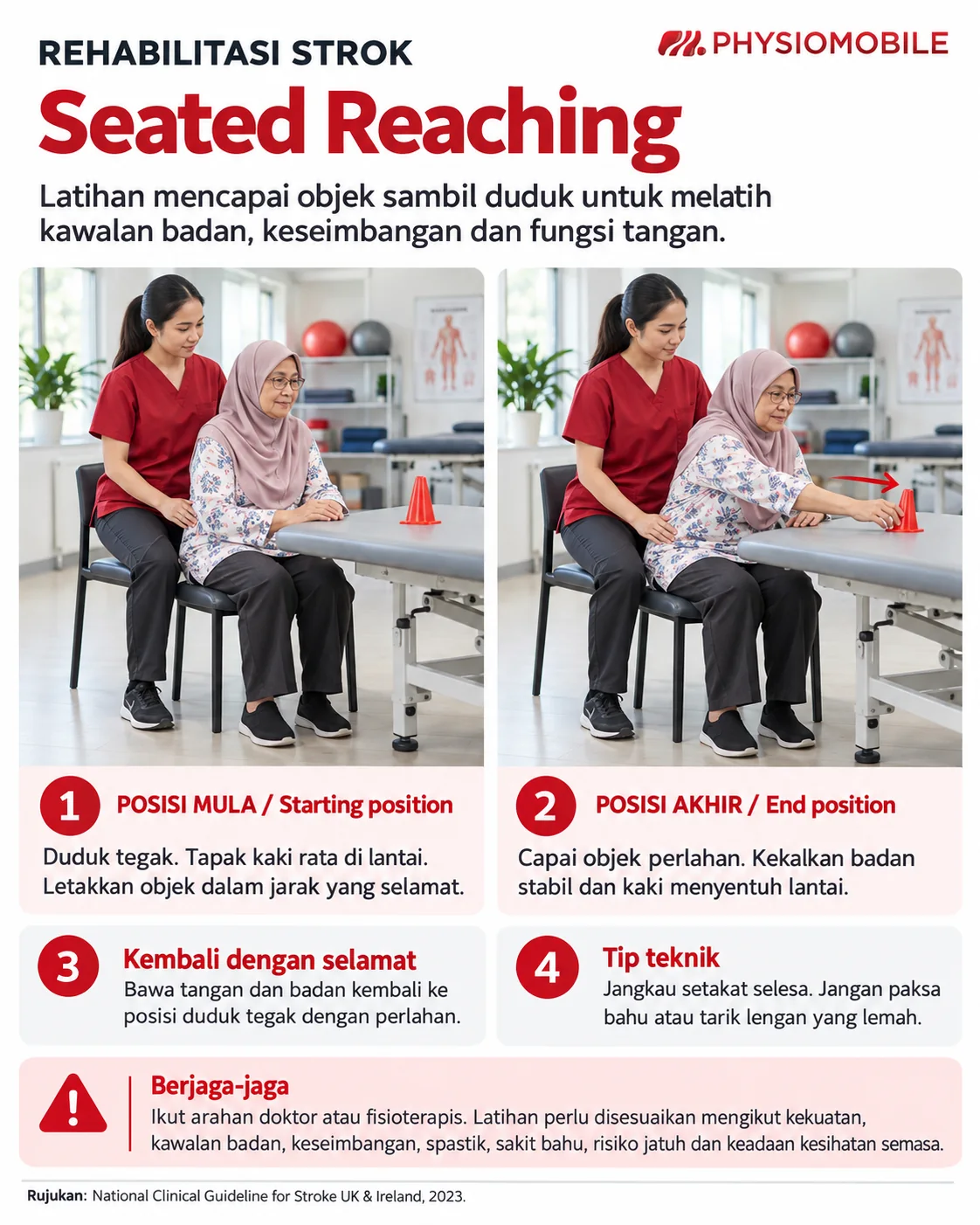
Balance practice example: seated reaching
This poster illustrates a seated reaching task. It is not a standard programme for every stroke survivor. A physiotherapist should first consider medical stability, sitting control, fatigue, shoulder safety, falls risk and the amount of assistance required. Stop and seek clinical advice if the task causes pain, marked dizziness or sudden deterioration.
The supplied poster contains brief exercise cues; this accessible explanation provides the clinical context.
Exercises are not interchangeable between patients. Unsupervised walking, pulling on a weak arm or copying advanced exercises can create fall or shoulder-injury risks.
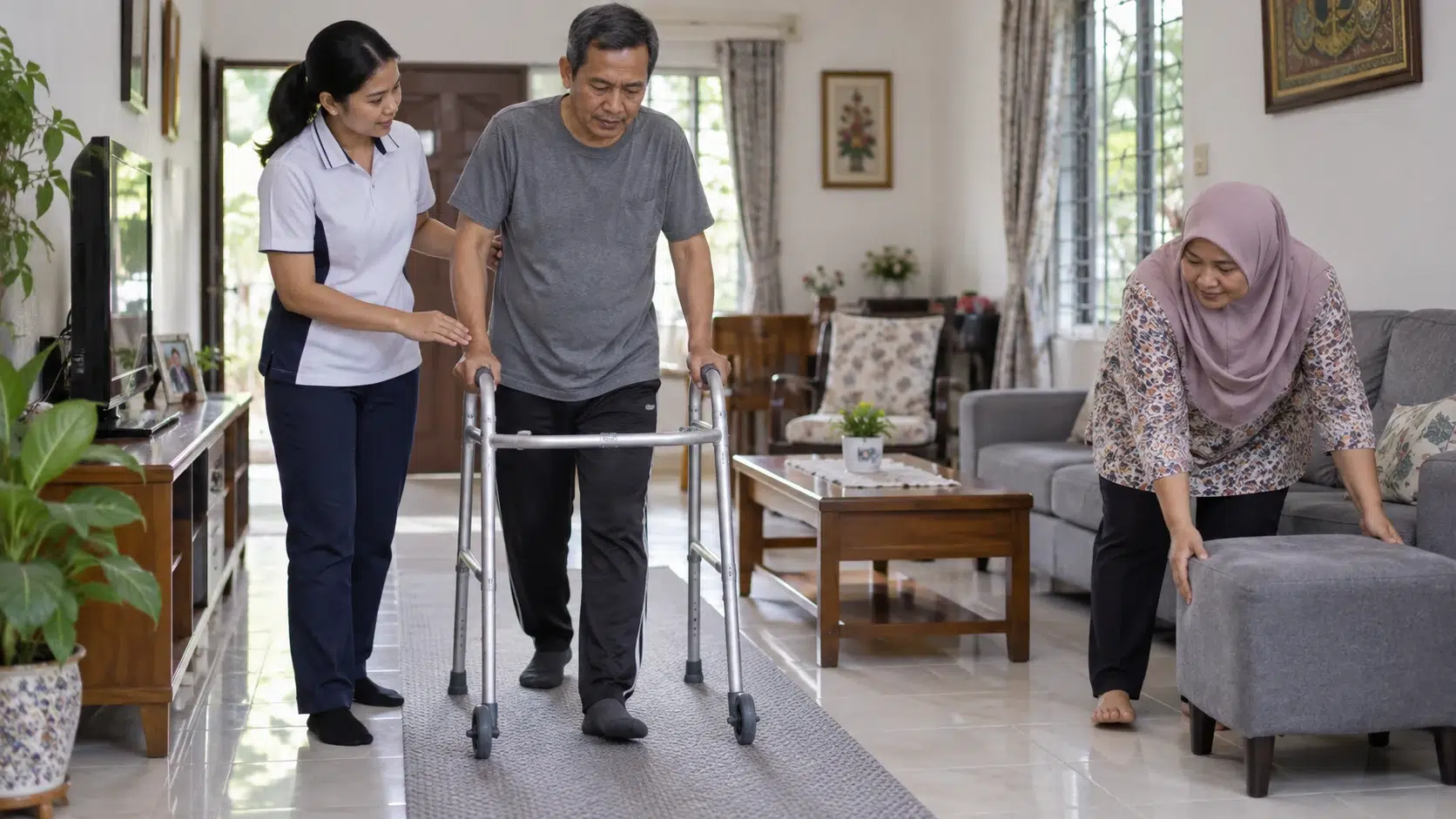
Centre, home and multidisciplinary care
Centre-based sessions may provide equipment and a controlled environment. Home sessions can focus on transfers, stairs and routines in the actual living space. Neither setting replaces specialist stroke follow-up. Occupational therapy, speech-language therapy, dietetics, psychology, nursing and medical care may be equally important depending on the person’s needs.
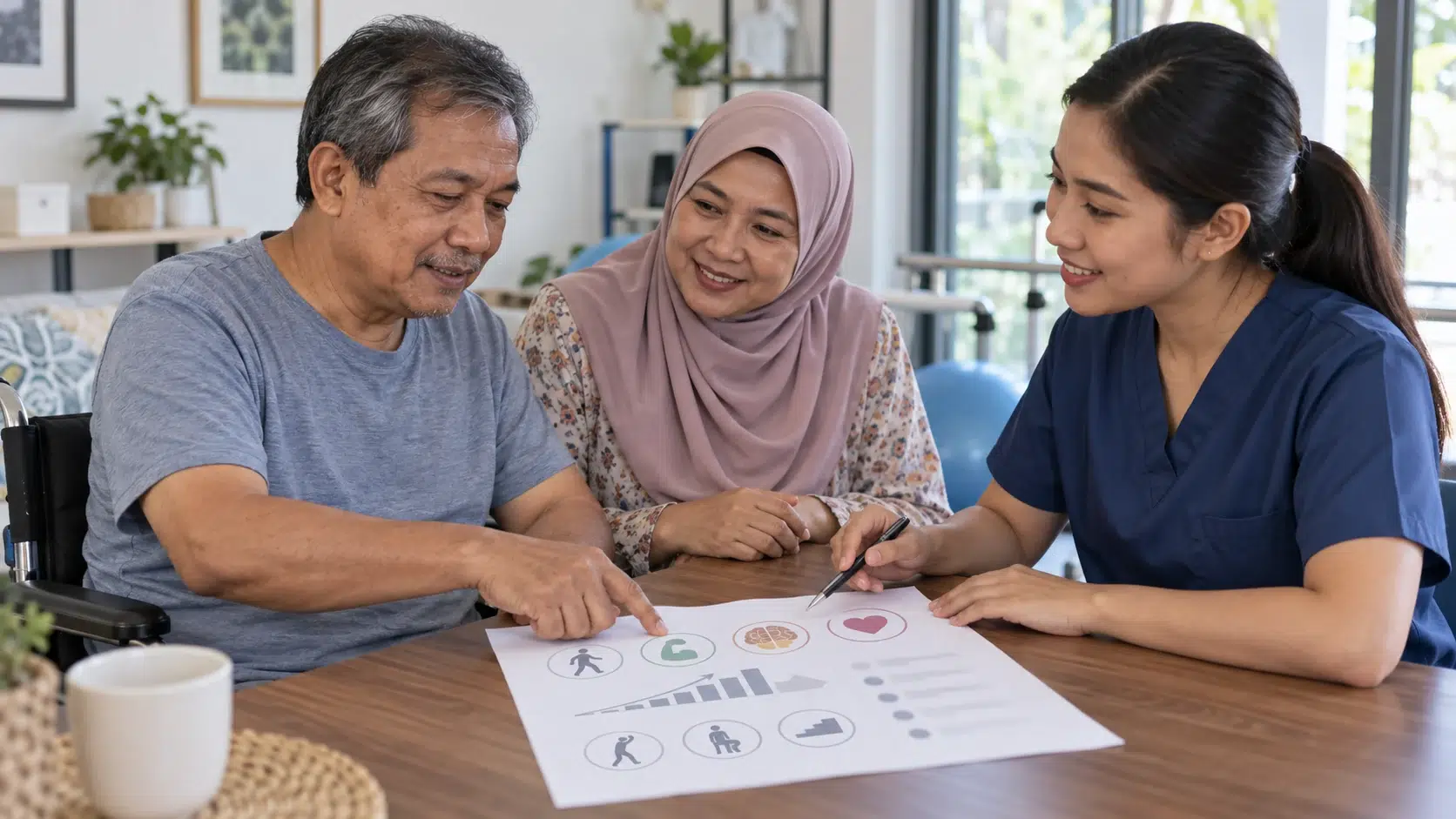
Planning the first appointment
Prepare the hospital discharge summary, current precautions, medication list, relevant scan or specialist reports, equipment details and contact information for the stroke team. Share any swallowing issues, seizures, falls, chest symptoms, new confusion or recent medical changes before activity begins.
Why Choose Physiomobile?
Physiotherapy should match the individual’s condition, function and goals. Physiomobile provides flexible options to support assessment and ongoing rehabilitation.
Centre or home visits
Choose centre-based or home physiotherapy, subject to clinical suitability, coverage and appointment availability.
Individualised planning
Assessment guides the treatment focus, exercises and progression. Outcomes vary between individuals.
Practical ongoing support
Receive clear education, home-exercise guidance and progress reviews based on your response and function.
Exclusive promotions in the Physiomobile app
Check the Physiomobile app for promotions that may be available from time to time. Availability, promotional periods and terms may change.
References
- NICE: Stroke rehabilitation in adults
- Stroke Association: Physiotherapy after stroke
- CDC: Signs and Symptoms of Stroke
Frequently asked questions
When should physiotherapy start after stroke?
The stroke team decides when a person is medically stable and ready. Assessment may begin in hospital and continue through inpatient, outpatient or home-based rehabilitation.
Can physiotherapy reverse a stroke?
No. Physiotherapy does not reverse the brain injury or replace acute stroke care. It supports movement, function, fitness and participation after medical stabilisation.
Is home physiotherapy suitable for everyone?
Not always. Suitability depends on medical stability, transfer and fall risk, cognition, communication, caregiver support, equipment and the home environment.
How long does stroke rehabilitation take?
There is no fixed timeline. Needs and progress vary, and rehabilitation should be reviewed against meaningful goals and safety.
What if new stroke signs appear during rehabilitation?
Stop the session and call 999 immediately for sudden face droop, new arm or leg weakness, speech or vision change, severe headache, loss of balance or altered consciousness.
Looking for a physiotherapy assessment?
After medical stabilisation and where physiotherapy is appropriate, Physiomobile can assess function and plan rehabilitation around the person’s needs.
Disclaimer: This information is for general education and is not a diagnosis or a substitute for medical assessment. Seek emergency help for sudden or severe symptoms.
