
Age alone is not a reason for physiotherapy. The more useful question is whether a change in movement, confidence or daily function is limiting the life your mother wants to lead. If the change is sudden or accompanied by emergency warning signs, seek medical care first rather than waiting for a physiotherapy appointment.

Seven signs your mother may need physiotherapy
1. Her walking has changed
She may take shorter steps, hold furniture, drag a foot, tire quickly or avoid uneven ground. A change from her usual pattern matters more than walking speed alone.
2. She has fallen or nearly fallen
A fall, repeated stumble or new fear of falling can reduce activity and confidence. WHO identifies older adults as the age group with the greatest number of fatal falls, so recurrent falls should not be dismissed as “normal ageing”.[1]
3. Standing and stairs are harder
Using both arms to rise, needing several attempts, avoiding stairs or requiring more help with transfers may reflect changes in strength, balance, pain or confidence.
4. Pain is reducing daily activity
Knee, back, shoulder or joint symptoms may lead her to stop cooking, shopping, praying, gardening or leaving home. Symptoms need assessment in context; pain alone does not identify one condition.
5. She is weaker after illness or hospital care
Time in bed, reduced appetite, medical illness or surgery can affect endurance and movement. Medical stability and any post-operative precautions should be confirmed before rehabilitation progresses.
6. Everyday tasks need more help
New difficulty bathing, dressing, getting in and out of bed, using the toilet or moving around the home may indicate a need for broader rehabilitation input, sometimes including occupational therapy or medical review.
7. She is recovering after stroke or surgery
Rehabilitation may support movement and daily function after medical clearance. Sudden new stroke signs, however, are an emergency and are not a routine physiotherapy issue.
What physiotherapy may help with
Physiotherapy may help address movement, strength, balance, walking, transfers, activity tolerance and confidence when these are affected by an injury, illness, surgery or age-related decline. WHO defines rehabilitation as interventions designed to optimise functioning and reduce disability in interaction with a person’s environment.[2]
The plan should be individual. It may include education, graded movement, task practice, home-safety suggestions, caregiver guidance and review of mobility aids. Physiotherapy does not replace medical diagnosis, imaging, medication management, surgery, occupational therapy, speech therapy or emergency care when those are required. Recovery is individual and cannot be predicted from one programme.

What to expect at the first assessment
The physiotherapist will usually ask about the change you have noticed, medical history, recent falls, pain, hospital treatment, current activities and your mother’s own goals. Assessment may include observing sitting and standing, strength, balance, walking, transfers and tolerance for activity. Bring relevant discharge notes, imaging reports, prescribed precautions and a current medication list where available, but do not change medication without the prescribing clinician.
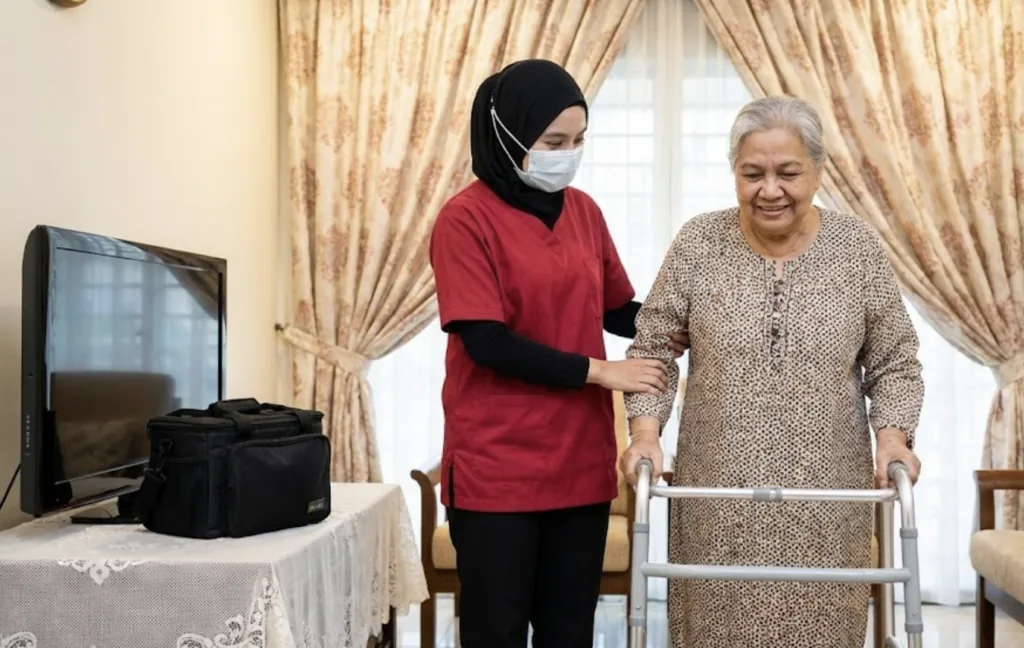
The outcome may be a physiotherapy plan, advice to obtain medical review, referral to another rehabilitation profession, or a recommendation that a centre or hospital setting is more suitable. Home physiotherapy can be useful when travel is difficult or real household tasks need review; centre care may be preferable when specific equipment or a more controlled environment is needed.

Safe steps before the appointment
- Write down when the change started, any falls or near-falls, and which activities are now difficult.
- Keep frequently used walking routes clear, dry and well lit; remove obvious loose rugs and cables.
- Use only walking aids already recommended for her and check that they are within reach.
- Avoid copying strenuous exercises or hands-on techniques from social media without assessment.
- Ask your mother what matters most to her, such as walking to the bathroom safely or joining a family outing.

When to seek urgent medical help
Choosing home or centre physiotherapy
The right setting depends on medical stability, mobility, goals, transport, caregiver support and the equipment required. Explore Physiomobile physiotherapy services, home physiotherapy options and stroke rehabilitation information. Availability for a home visit or centre appointment must be confirmed for the preferred location and time.
Frequently asked questions
Is slower walking always a sign that physiotherapy is needed?
No. Slower walking can have several causes. A meaningful change from your mother’s normal function, especially with falls, pain or weakness, deserves appropriate assessment.
Can physiotherapy be done at home?
It may be suitable when travel is difficult or the home environment needs review. Suitability depends on medical stability, goals, safety, exact location and therapist availability.
How many sessions will she need?
There is no standard number. Recommendations should follow assessment and be reviewed according to goals, function, symptoms and response.
Should a caregiver attend?
A caregiver can help explain recent changes and learn safe support strategies, but your mother’s preferences and consent remain important.
Clarify the next step
If symptoms are increasingly affecting daily activities, an early assessment can reduce uncertainty and guide your mother and caregivers. Home and centre slots depend on physiotherapist availability, location and preferred time, so booking earlier may help secure a suitable option.
Disclaimer: This article provides general education, not a diagnosis, exercise prescription or substitute for medical assessment. Seek urgent help for emergency warning signs.