Partner Learning · Manual Therapy
Muscle Energy Technique atau MET ialah teknik manual therapy yang menggunakan kontraksi otot secara lembut dan terkawal. Berbeza daripada regangan pasif, pesakit terlibat secara aktif dengan menghasilkan kontraksi mengikut arahan fisioterapis.
Muscle Energy Technique, or MET, is a manual therapy technique that uses gentle and controlled muscle contractions. Unlike passive stretching, the patient actively participates by producing a contraction under the physiotherapist’s guidance.
Learning outcomes
Explain the basic concept of MET and the patient’s active role.
Briefly differentiate autogenic inhibition and reciprocal inhibition.
Use assess, apply and reassess to determine the technique’s clinical value.
MET bukan sekadar regangan. Ia perlu dipilih berdasarkan penilaian, keselamatan, objektif fungsi dan respons pesakit.
MET is more than stretching. It should be selected based on assessment, safety, functional goals and the patient’s response.
Pengenalan | Introduction
Muscle Energy Technique boleh digunakan sebagai sebahagian daripada pelan rehabilitasi untuk membantu meningkatkan mobiliti, mengurangkan rasa tegang dan menyediakan pesakit untuk melakukan pergerakan atau senaman dengan lebih baik.
Muscle Energy Technique may be incorporated into a rehabilitation plan to support mobility, reduce the feeling of tightness and prepare the patient for movement or exercise.
Dalam konteks klinikal, teknik ini bukan formula tetap untuk semua pesakit yang mempunyai otot tegang. Ia memerlukan clinical reasoning, arahan yang jelas dan penilaian semula selepas aplikasi.
In clinical practice, this technique is not a fixed formula for every patient who reports muscle tightness. It requires clinical reasoning, clear instructions and reassessment after application.
Bagaimana MET Dilakukan? | How Is MET Performed?
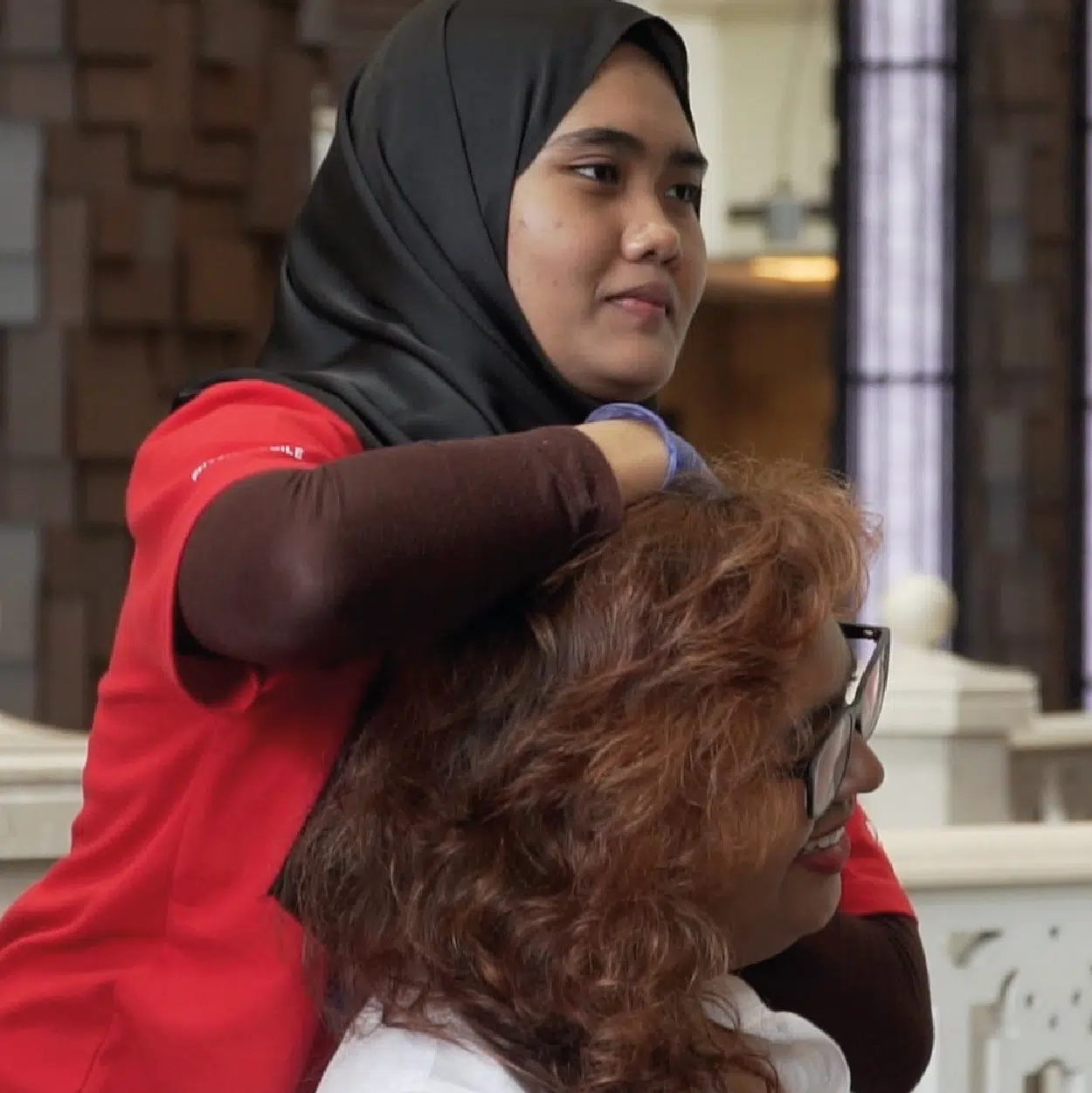
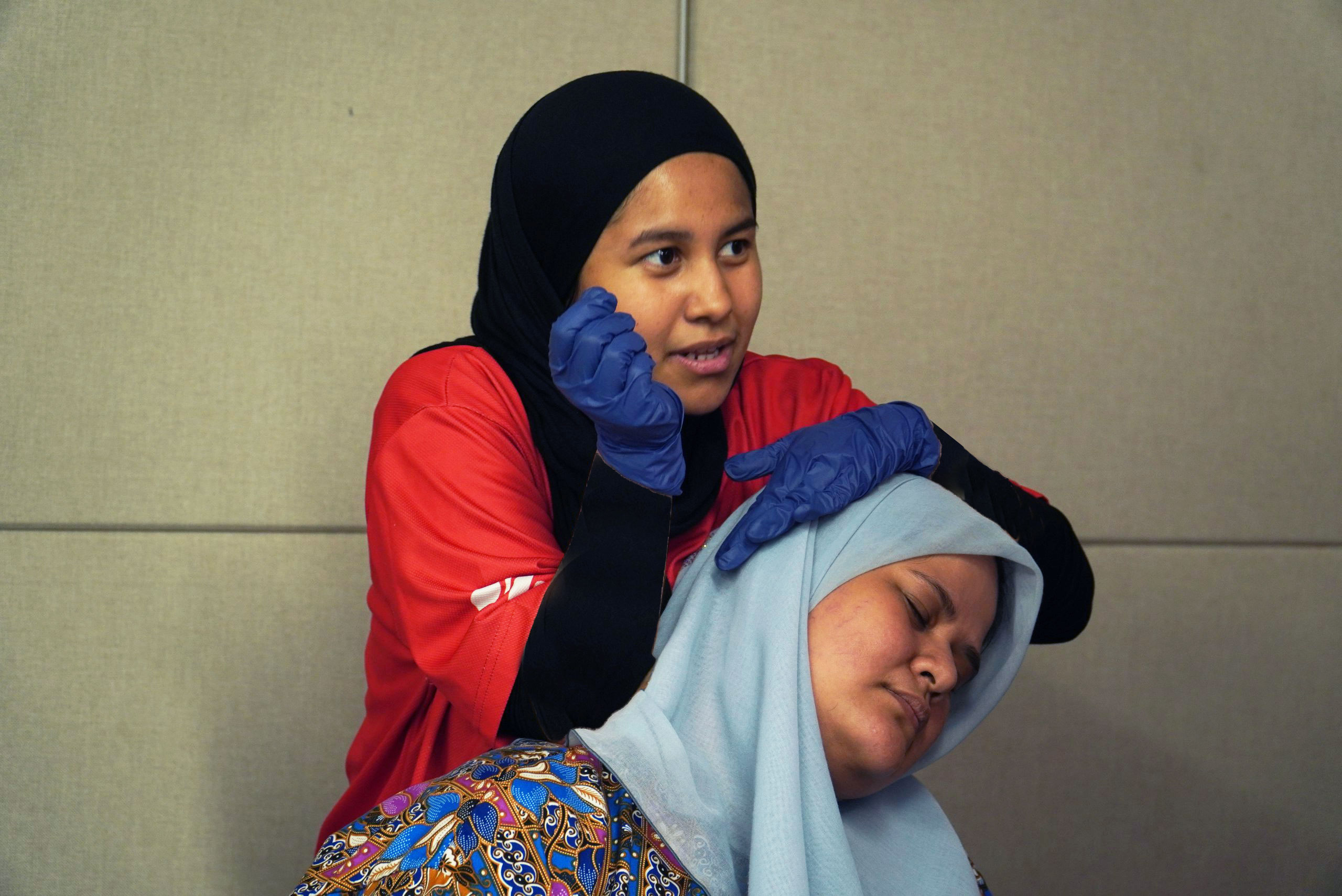
Dalam aplikasi asas MET, fisioterapis membawa anggota badan ke posisi yang sesuai berdasarkan penilaian dan toleransi pesakit.
In a basic MET application, the physiotherapist positions the body part according to the assessment findings and the patient’s tolerance.
Pesakit kemudian menghasilkan kontraksi otot secara perlahan melawan rintangan yang diberikan oleh fisioterapis. Kontraksi tersebut biasanya bersifat isometrik, iaitu otot menghasilkan daya tanpa pergerakan sendi yang ketara.[1]
The patient then performs a gentle muscle contraction against resistance provided by the physiotherapist. The contraction is commonly isometric, meaning the muscle produces force without significant joint movement.[1]
Selepas kontraksi dihentikan dan pesakit kembali relaks, fisioterapis boleh membawa anggota badan ke julat pergerakan baharu secara terkawal. Proses ini boleh diulang mengikut objektif rawatan dan respons pesakit.
After the contraction is released and the patient relaxes, the physiotherapist may gently move the body part into a new range. The process may be repeated according to the treatment objective and the patient’s response.
Dua Konsep Utama | Two Main Concepts
Autogenic inhibition melibatkan kontraksi submaksimum pada otot yang ingin diregangkan, diikuti dengan tempoh relaksasi dan regangan secara terkawal.[1]
Autogenic inhibition involves a submaximal contraction of the muscle being targeted, followed by relaxation and a controlled stretch.[1]
Contohnya, jika hamstring menjadi sasaran, pesakit menghasilkan kontraksi hamstring sebelum fisioterapis membimbing pergerakan ke julat yang baharu.
For example, when targeting the hamstrings, the patient contracts the hamstrings before the physiotherapist guides the limb into a new range.
Reciprocal inhibition menggunakan kontraksi otot yang berlawanan dengan otot sasaran. Pengaktifan otot lawan boleh membantu otot sasaran menjadi lebih relaks.[1]
Reciprocal inhibition uses a contraction of the muscle opposing the target muscle. Activating the opposing muscle may help the target muscle relax.[1]
Sebagai contoh, kontraksi quadriceps boleh digunakan apabila hamstring ialah otot yang ingin dipengaruhi.
For example, a quadriceps contraction may be used when the hamstrings are the target muscles.
MET Bukan Sekadar Regangan | MET Is More Than Stretching
Sebelum memilih teknik ini, fisioterapis perlu menentukan beberapa perkara penting:
Before selecting this technique, the physiotherapist should determine several important factors:
Assess, Apply and Reassess
Assess
Pilih penanda klinikal yang relevan sebelum rawatan, seperti julat pergerakan, tahap kesakitan, kualiti pergerakan atau aktiviti fungsi.
Select a relevant clinical marker before treatment, such as range of movement, pain level, movement quality or a functional activity.
Apply
Gunakan kontraksi lembut, terkawal dan difahami pesakit. Dos dan arah kontraksi perlu sepadan dengan objektif rawatan.
Use a gentle, controlled contraction that the patient understands. Dosage and contraction direction should match the treatment objective.
Reassess
Nilai semula penanda yang sama. Jika tiada perubahan bermakna, pertimbangkan semula teknik, dos, arah kontraksi atau hipotesis klinikal.
Recheck the same marker. If there is no meaningful change, reconsider the technique, dosage, contraction direction or clinical hypothesis.
Integrasi dengan Active Rehabilitation | Integration with Active Rehabilitation
MET tidak sepatutnya menjadi satu-satunya komponen rawatan. Sebarang perubahan sementara pada mobiliti perlu disokong dengan active rehabilitation.
MET should not be the only component of treatment. Any temporary improvement in mobility should be supported through active rehabilitation.
Matlamatnya bukan sekadar mendapatkan julat pergerakan tambahan selepas rawatan. Matlamat yang lebih penting ialah membantu pesakit menggunakan pergerakan tersebut dalam aktiviti yang bermakna.
The goal is not merely to gain additional range immediately after treatment. The more important goal is to help the patient use that movement during meaningful activities.
Keselamatan dan Langkah Berjaga-jaga | Safety and Precautions
MET memerlukan kerjasama aktif daripada pesakit. Arahan perlu mudah difahami dan kontraksi tidak sepatutnya dilakukan secara mengejut atau menggunakan daya berlebihan.
MET requires active cooperation from the patient. Instructions should be clear, and contractions should not be sudden or excessively forceful.
Langkah berjaga-jaga diperlukan untuk fraktur akut atau kecederaan yang belum stabil, osteoporosis yang teruk, keradangan akut, ketidakstabilan sendi, pembedahan terkini atau sekatan daripada doktor, serta kesakitan atau simptom neurologi yang semakin meningkat.
Precautions are required for acute fracture or unstable injury, severe osteoporosis, acute inflammation, joint instability, recent surgery or restrictions from the treating doctor, and increasing pain or worsening neurological symptoms.
Jika terdapat keraguan tentang keselamatan, teknik perlu dihentikan dan pesakit perlu dinilai dengan lebih lanjut.
If there is uncertainty regarding safety, the technique should be stopped and the patient should receive further assessment.
Kesimpulan | Conclusion
Muscle Energy Technique ialah pendekatan manual therapy aktif yang menggabungkan kontraksi otot pesakit dengan panduan dan rintangan daripada fisioterapis.[1]
Muscle Energy Technique is an active manual therapy approach that combines the patient’s muscle contraction with guidance and resistance from the physiotherapist.[1]
Keberkesanan penggunaannya bergantung pada penilaian yang baik, pemilihan pesakit, dos yang sesuai dan penilaian semula selepas rawatan.
Its clinical value depends on appropriate assessment, patient selection, suitable dosage and reassessment after treatment.
Partner Physiomobile perlu memahami bukan sahaja langkah melakukan MET, tetapi juga rasional pemilihan, aspek keselamatan dan cara mengintegrasikannya dengan active rehabilitation.
Physiomobile Partners should understand not only how MET is performed, but also why it is selected, how it is applied safely and how it can be integrated with active rehabilitation.
References and learning sources
Professional education disclaimer
Artikel ini bertujuan untuk pendidikan profesional. Ia tidak menggantikan latihan praktikal, penyeliaan klinikal, rujukan primer, clinical judgement, informed consent atau penilaian individu. Gunakan hanya teknik yang berada dalam kompetensi dan skop amalan anda.
This article is intended for professional education. It does not replace practical training, clinical supervision, primary references, clinical judgement, informed consent or individual assessment. Use only techniques within your competency and scope of practice.